
Open space and dynamic workspaces: the office as a living space
New ways of working bring new ways of seeing workspaces. From the beginning of the open-plan office to flex offices and dynamic spaces, a brief retrospective that highlights the need for employees to consider the office as a living space and therefore… To feel good there.
Breaking down rigid barriers
In 1936, American architect Frank Lloyd Wright designed the Johnson Wax Building, intended to improve the daily lives and productivity of the company’s employees. Inside, everything is organized around a large, open-plan workspace. This is the precursor to the open-plan office, a concept designed to facilitate the flow of information by bringing work groups closer together . The administration occupies large rooms, managers have individual offices, and senior executives occupy more luxurious offices.
But it wasn’t until the 1960s that this concept truly took hold. Employees were growing tired of rigid, hierarchical workspaces. In 1968, designer Robert Propst created the first “mini-office,” called a cubicle. It consisted of a work surface attached to a half-height panel, connected to two other partitions to form a small, open-sided unit. Placed side-by-side, these cubicles offered multiple layout possibilities while providing a private space for each employee. The open-plan office thus allowed for increased workspace with very little investment , despite drawbacks that quickly emerged, such as a lack of personalization, noise, and distractions from neighbors.
From open-plan office to flex office
In the 1980s and 90s, office work became more flexible, with autonomous and adaptable teams, smoother information flow, and IT tools shaping workspaces. The concept of the “non-territorial office,” or “combi-office,” emerged, offering even greater flexibility in layout and for the user. Spaces were no longer designed according to needs but rather according to their intended purpose (photocopying, meetings, etc.). Employees moved between these spaces, and the spatial organization also depended on the cabling that connected the IT equipment to each other and to the outside world.
This concept was taken a step further in 1995 by the Arthur Andersen firm in Paris, where employees, often working on client projects, no longer had assigned desks but simply a personal pedestal on wheels. They then had to reserve their desk for a variable period. A precursor to the flexible office!
New workspaces for new ways of working
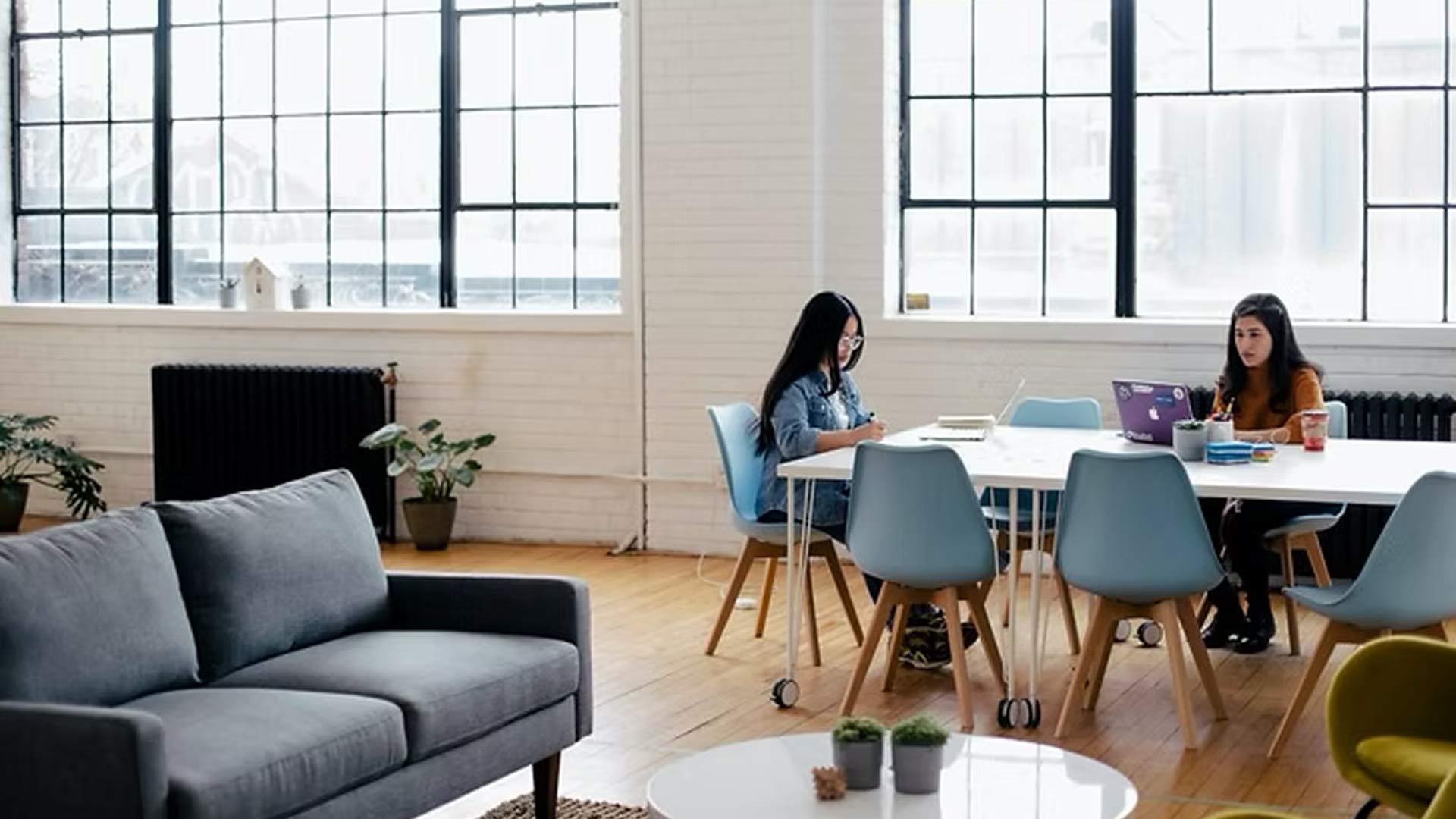
But, from the early 2000s, new demands emerged and the meaning of work took precedence over status recognition. The space then had to be pleasant and inspiring and the concept of the office as a living space appeared (with sofas, beanbag chairs, foosball tables, etc.).
It was also in 2005 that the new phenomenon of coworking, or “third places”—shared spaces like cafés, offering even more freedom—emerged. In Paris, La Cantine was the first coworking space to open its doors in 2008. But we can also mention KWERK, based in the 8th arrondissement: open or private offices where the concept of well-being is paramount.
From workspace to living space
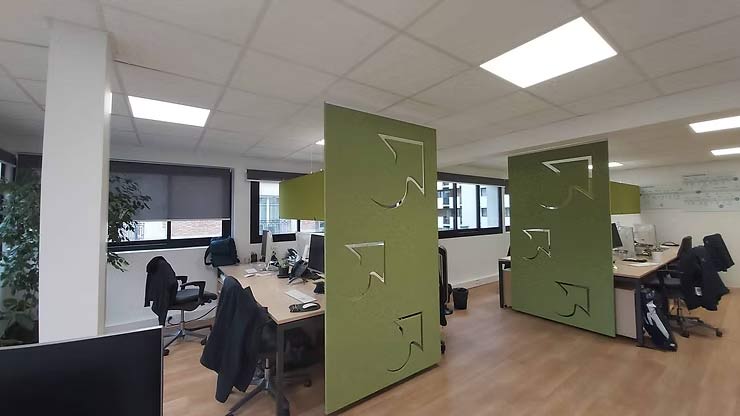
Today, the workspace is undergoing a new evolution, directly in line with our digital transition and the rise of flexible offices. Habits are changing (remote work, collaborative work, mobility, etc.), and so are needs . The office must reinvent itself to offer optimal flexibility in space and time. Living spaces are expanding and are no longer considered wasted space. The open-plan office remains the preferred format for collaborative work, but it has become essential to adapt it. Balancing the need for privacy with the necessity of better noise management, it is complemented by various amenities.
me spaces reserved for meetings, telephone calls, relaxation, etc.
The office has become a dynamic space, a place to work but also to live, making it an attractive place to be (just look at the limitations of remote work following the various lockdowns). And, for companies, this new approach also allows them to value the workspace as an asset for attracting and retaining young talent.
Dynamic spaces today are therefore large, open areas where noise reverberates. But this nuisance is not inevitable. Design options exist, and soundproofing is easily managed. Provided, of course, that the right solutions are chosen so that the office becomes both a workspace and a living space, a pleasant place to be.
Want to explore acoustic solutions that are tailored to your next design project? Take a look at our full range of acoustic solutions here or give us a call on +44 (0)20 3889 9888, email us at hello@allsfar.com or fill in our contact form on our website here.
Vous souhaitez découvrir des solutions acoustiques adaptées à votre prochain projet de conception ? Consultez notre gamme complète de solutions acoustiques ici ou contactez-nous au +33 (0)1 89 71 41 60, envoyez-nous un mail à contact@allsfar.com ou remplissez notre formulaire de contact sur notre site web ici.
Keep In Touch
Sign up to our newsletter and find out about our latest products, new projects and showroom events.
Rester en contact
Inscrivez-vous à notre newsletter et découvrez nos derniers produits, nos nouveaux projets et les événements organisés dans nos showrooms.

Products
Contact
T: +44 (0)20 3889 9888
AllSfär © 2026
Produits
Liens
Contact
Paris | St Etienne | Alès