
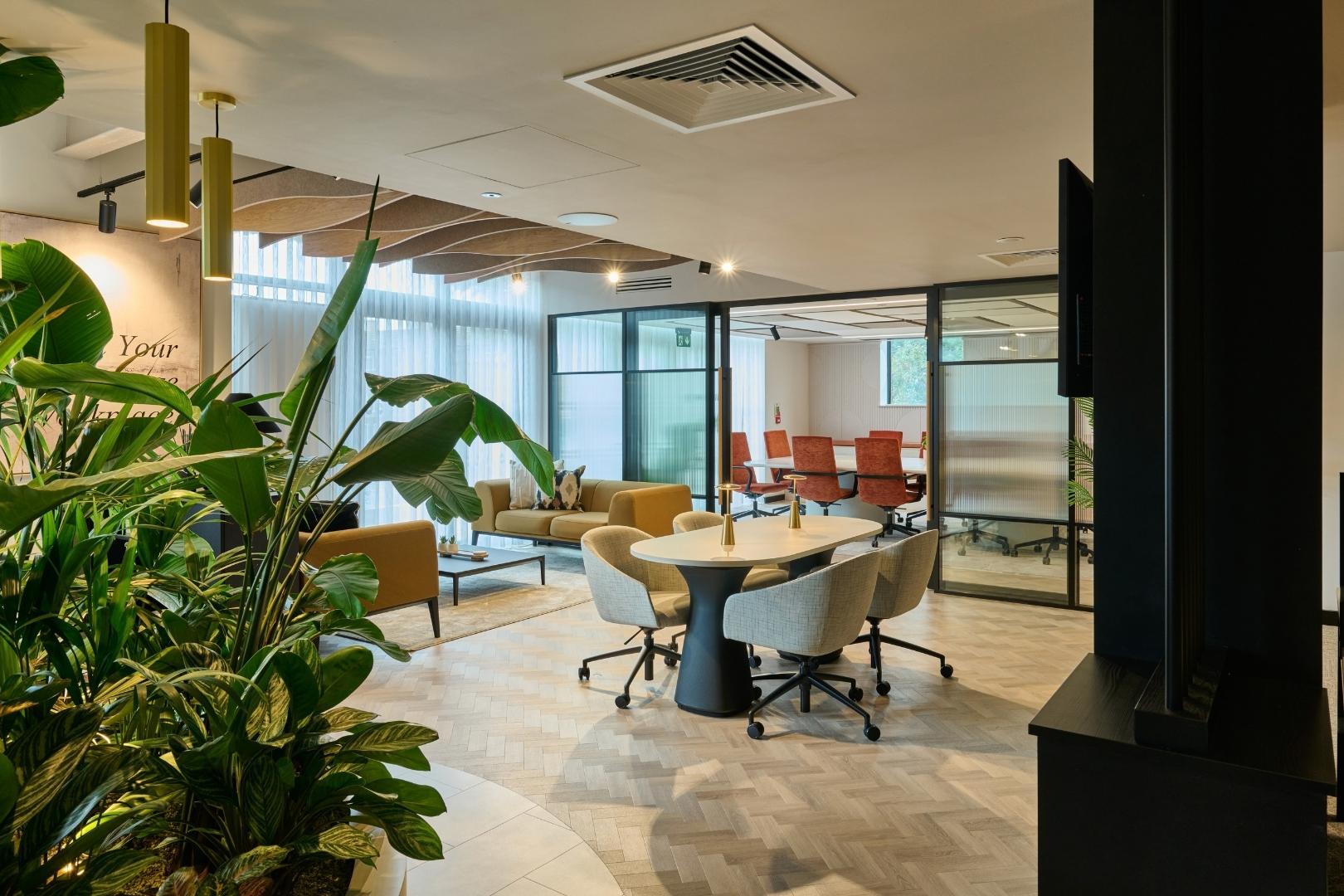
What a Neuroinclusive Office Actually Sounds Like
Think about the last five minutes in your office. What could you hear?
Someone on a Teams call. A phone ringing. The coffee machine. Keyboard tapping. A chair scraping across the floor. Maybe the hum of the air conditioning or a conversation happening a few desks away.
Chances are that you barely noticed half of it.
But not everyone experiences sound in the same way.
It’s estimated that around 1 in 7 people in the UK are neurodivergent, according to research published by City & Guilds. So, when we’re designing workplaces for different people and different ways of working, neuroinclusion is something that needs to be part of the conversation.
For some neurodivergent people, the everyday sounds that others naturally tune out can be much harder to ignore. Something as simple as a colleague clicking a pen, a phone vibrating on a desk or conversations happening nearby can make it difficult to concentrate and, for some, become overwhelming.
The 2023 Neurodiversity Index from City & Guilds and Do-IT Solutions found that 40% of neurodivergent employees surveyed said they were impacted most days at work by their condition.
So, when we talk about creating more neuroinclusive workplaces, perhaps we need to spend a little less time thinking about what they look like and more time thinking about what they sound like.

There is often an assumption that good workplace acoustics means creating a quiet office. But silence isn’t the goal.
An office could seem relatively quiet and still be incredibly distracting for someone who is more sensitive to certain sounds.
Think about sitting in a quiet room with someone repeatedly clicking a pen. It isn’t particularly loud, but once you notice it, it can become almost impossible not to notice it.
Now imagine trying to concentrate while experiencing several of those distractions at once.
It isn’t simply about how loud a workplace is. The type of sound, where it comes from and how much control someone has over it can all affect how a space feels.
In fact, PAS 6463:2022, the BSI’s Design for the Mind guidance, specifically includes acoustics as one of the areas that should be considered when designing environments for people who experience sensory and neurological processing differences. The guidance covers everything from acoustics and lighting to layout, wayfinding and quiet spaces.
Modern workplaces are full of sound. Calls, conversations, footsteps, keyboards, printers, doors, coffee machines, ventilation and people moving around the space all create a constantly changing background.
Most of us filter a lot of this out without really thinking about it.
But people experience and process sensory information differently. For someone with heightened sensitivity to sound, those background noises may not fade into the background quite so easily.
And the design of the space itself can make things worse.
Hard floors, exposed ceilings, glazing and other reflective surfaces allow sound to bounce around a workplace. Conversations can travel further, activity from collaborative areas can spill into focus spaces and suddenly there are several different sounds competing for attention.
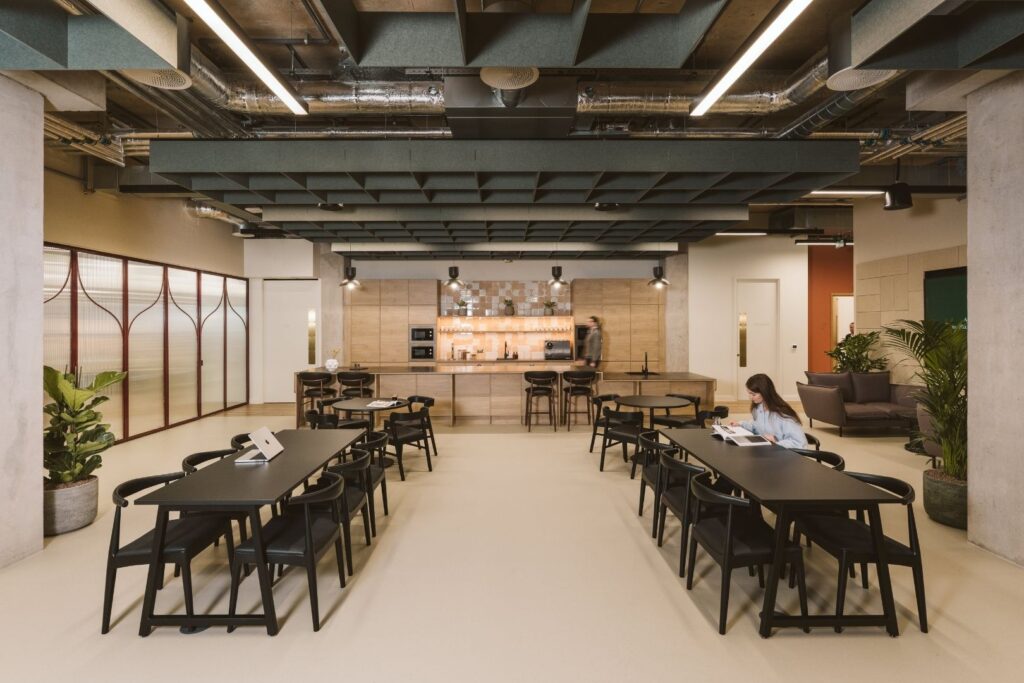
So, what should a neuroinclusive office actually sound like?
The answer probably isn’t one thing. And that’s the point.
A good workplace needs to support lots of different people doing lots of different things. There should be spaces where conversation and collaboration are encouraged, areas where people can take calls without distracting everyone around them, quieter places to concentrate and spaces to step away from the buzz of the wider office when needed.
Rather than trying to create one acoustic environment that works for everyone, giving people choice and control can be much more effective.
Someone who enjoys the energy of a busy office can work within it. Someone who finds that same environment distracting has somewhere quieter to go.
And we shouldn’t assume we’ll always know who needs those options. According to the 2023 Neurodiversity Index from City & Guilds and Do-IT Solutions, 32% of respondents said they had felt unable to disclose their neurodivergent condition in the workplace.
Designing choice into a workplace from the outset means people don’t necessarily have to ask for it. And that flexibility can benefit everyone, not just those who identify as neurodivergent.
This is where acoustics needs to become part of the design conversation from the beginning.
Good acoustic design isn’t simply about adding panels to a wall because a room is too echoey. It starts with thinking about how the space will actually be used.
Where will people have conversations? Where will they concentrate? Where will Teams calls happen? Which areas are likely to get busy? And where can someone go when they need fewer distractions?
From there, acoustic treatments can be used much more intentionally. Ceiling baffles and rafts can help absorb sound across busy open spaces. Wall treatments can reduce reflections from large hard surfaces. Screens can help define different working zones. Even the positioning of furniture and different activities can influence how sound moves around a workplace.

At AllSfär, we talk a lot about Creating Calm. But calm doesn’t necessarily mean silence.
It can mean being able to concentrate when you need to. Having a conversation without competing with the rest of the room. Being able to step away from a busy environment. Or simply spending a day at work without constantly noticing everything happening around you.
And what feels calm to one person might feel completely different to someone else.
There will never be one perfect acoustic environment that works for every brain. But by designing workplaces with more choice, better acoustic zoning and a greater understanding of how differently people experience sound, we can create spaces that work better for more of us.
Because sometimes the sounds you barely notice are the ones someone else simply can’t ignore.
Have a look at our acoustic top tips for Neuroinclusive spaces here, or take a look at our full range of acoustic products here.
Want to explore acoustic solutions that are tailored to your next design project? Take a look at our full range of acoustic solutions here or give us a call on +44 (0)20 3889 9888, email us at hello@allsfar.com or fill in our contact form on our website here.
Vous souhaitez découvrir des solutions acoustiques adaptées à votre prochain projet de conception ? Consultez notre gamme complète de solutions acoustiques ici ou contactez-nous au +33 (0)1 89 71 41 60, envoyez-nous un mail à contact@allsfar.com ou remplissez notre formulaire de contact sur notre site web ici.
Keep In Touch
Sign up to our newsletter and find out about our latest products, new projects and showroom events.
Rester en contact
Inscrivez-vous à notre newsletter et découvrez nos derniers produits, nos nouveaux projets et les événements organisés dans nos showrooms.

Products
Contact
T: +44 (0)20 3889 9888
AllSfär © 2026
Produits
Liens
Contact
Paris | St Etienne | Alès