
The Future of Calm Workspaces: Acoustic Design Trends for 2026
As our workplaces continue to evolve, one thing is becoming increasingly clear: calm and inclusivity isn’t a trend, it’s an expectation. With hybrid work patterns, growing sensory awareness, and a renewed focus on wellbeing, designers are looking for solutions that help people feel grounded, focused, and supported throughout the day.
Acoustics play a big role in shaping these environments. Looking ahead to 2026, several emerging trends are helping designers create workspaces that are flexible, balanced and genuinely comfortable to be in. We have pulled together some of the trends we think are going to be big in 2026.

Biophilic Acoustics
Biophilic design isn’t new, but it’s becoming more purposeful. In 2026, designers will be looking for ways to bring natural elements into the workplace not just for aesthetics, but to soften both the look and sound of a space and bring nature back into the built environment.
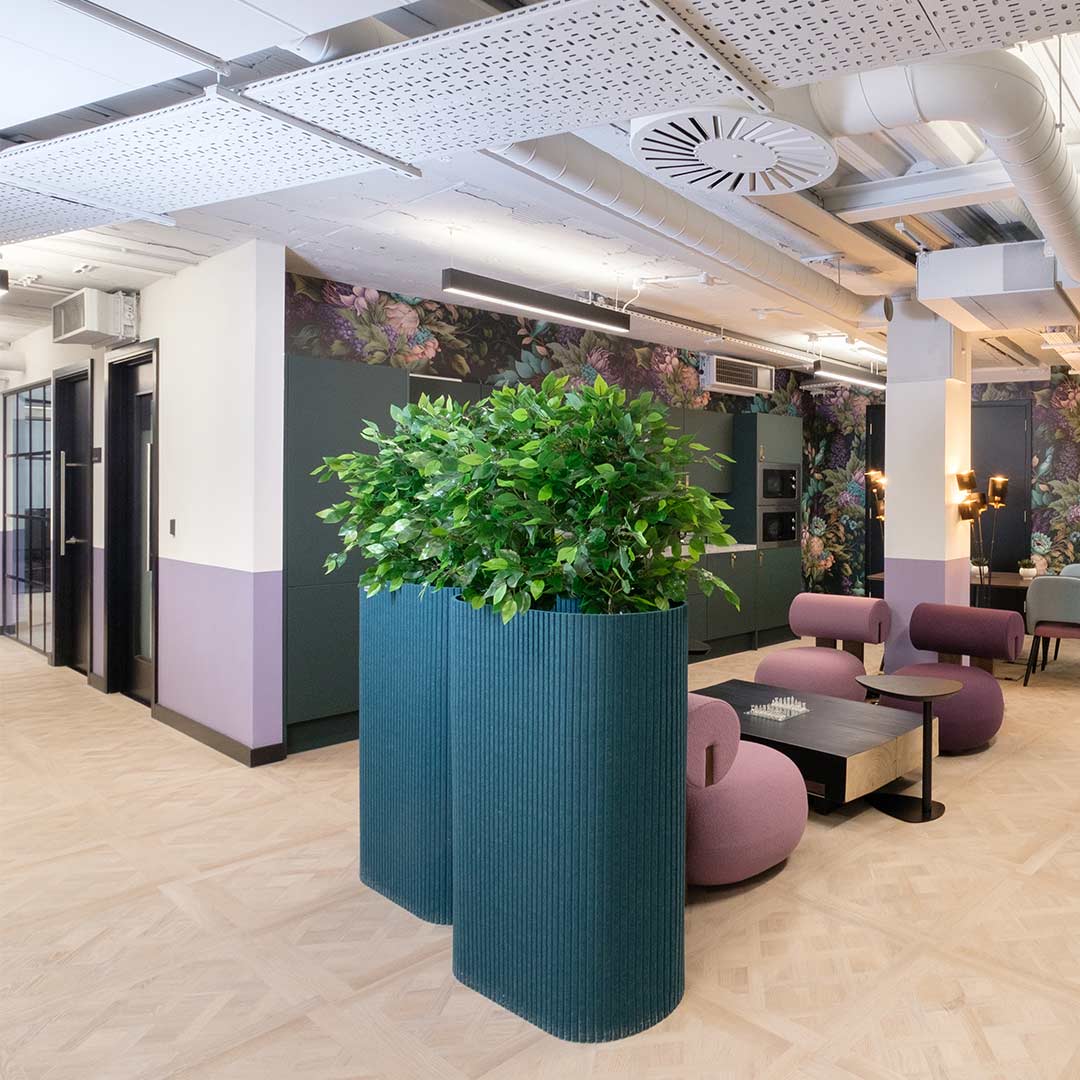
Acoustic solutions that integrate planting are gaining traction because they offer two benefits at once: calm in two ways with plants, and sound absorption. Our acoustic Blom planters are a great example of this, introducing greenery in a way that also helps create quieter areas.
As workplaces become more sensory-aware, biophilic acoustic solutions will play an even bigger role in creating environments that feel healthier and more grounded.

Flexible Zoning
Workplaces rarely stay still. Teams change, layouts shift, and spaces are repurposed all the time, especially with the rise of hybrid working. That’s why modular acoustic systems, and more flexible zoning are becoming a key part of workspace design for 2026.
Hanging screens, partitions, and free-standing screens that can move or adapt allow designers to create flexible zones without compromising acoustic comfort. Solutions like our Lull screens on sliding tracks, or our Orbit and Diffuse free-standing screens, make it easy to adjust the layout as needs evolve.
This approach helps keep noise under control while giving designers and those that use the space, the freedom to shape spaces that support every situation.

Multi-Sensory Calm Zones
More organisations are recognising the value of creating places where people can pause, reset, or concentrate without overstimulation. These “calm zones” are becoming an important part of inclusive workplace design.
In 2026, these spaces go beyond acoustic comfort. Designers are layering soft lighting, tactile materials, natural colour palettes, and biophilic elements to create balanced, low-stimulus environments. Acoustics form the foundation, helping the space feel quieter and more comfortable from the moment someone steps inside.
These multi-sensory zones support everyone, but they’re particularly valuable for colleagues who experience sensory sensitivity or simply need a moment of calm during a busy day.

High-Performance Acoustics for Hybrid Work
Hybrid working has changed how sound behaves in the office. With more video calls happening in shared spaces, overlapping conversations, and varied collaboration styles, high-performance acoustics are no longer optional.
Designers are already turning to layered acoustic solutions to create spaces that feel calmer and easier to work in, and we think this is going to take off in 2026. This includes improving speech clarity in meeting rooms, creating semi-private focus areas, and managing noise spill in open zones.
The aim isn’t silence — it’s balance. When people can hear clearly, concentrate easily, and collaborate without disrupting others, the whole workspace feels more supportive and productive.

Acoustic Furniture as a Design Element
Furniture is becoming a bigger part of acoustic strategy. Rather than treating acoustics as a separate layer, designers are choosing pieces that naturally absorb sound or help define quieter areas.
Ranges like our Diffuse Workbox reflect this shift, offering furniture that supports both function and acoustic comfort. Acoustic pods also remain a popular choice for teams who need private areas for calls, focus work, or brief moments of calm.
But it’s not only acoustic furniture that can make a difference. Any soft furnishings, such as sofas and chairs, help to absorb sound, and create a more comfortable workspace (in more ways than one!).
We feel that this isn’t a trend that is going to go away soon, as everyone wants spaces that support people and wellbeing. And by thinking about furniture acoustically, designers can create spaces that feel considered, cohesive, and more comfortable day to day.

Hospitality-Inspired Spaces
Workplaces are increasingly borrowing from hospitality design — softer forms, layered textures, and warmer, more inviting materials. In 2026, this “quiet luxury” approach is influencing acoustic solutions too.
Designers are choosing products that feel refined, sculptural, and gentle on the senses. Collections like Öra Layered and Stratus fit naturally into this direction, offering acoustic performance without compromising on a calming, hospitality-inspired look.
This trend reflects a wider shift towards workplaces that feel more like places people want to be in, not just somewhere they have to be.

Colour Trends
Colour is playing a bigger role in how calm a workspace feels, not just how it looks. In 2026, we’re going to see more earthy neutrals and warm tones replacing cooler greys, creating spaces that feel softer and more grounded. Shades like Sand, Pebble, and Dove White work beautifully as a base palette, especially when paired with textured finishes and acoustic materials. But the stand out colour for 2026 will be the Cloud Dancer shade (our cosset colour), as predicted by Pantone. This calming, simple standout a great base to build from.
Alongside this, muted greens such as Warbler Sage Green and Turaco Olive Green continue to grow in popularity, supporting biophilic design and helping reduce visual stimulation. Deeper accents like Mallard Teal or Swallow Dark Blue are also being used more intentionally to add depth and define zones without overwhelming the space.
Shaping the Future of Calm Workspaces
As these trends show, acoustics continue to play a central role in how people experience the workplace. When sound is managed thoughtfully, spaces become more comfortable, more inclusive, and more enjoyable to use.
Looking ahead to 2026, the focus is clear: create environments that support people, adapt with them, and help them feel calm and capable throughout the day.
Want to explore acoustic solutions that are tailored to your next design project? Take a look at our full range of acoustic solutions here or give us a call on +44 (0)20 3889 9888, email us at hello@allsfar.com or fill in our contact form on our website here.
Keep In Touch
Sign up to our newsletter and find out about our latest products, new projects and showroom events.

Products
AllSfär © 2026